Data centers are getting hotter in more than one sense. As servers multiply, the electricity needed to keep them cool has become a major part of their global footprint. One idea is to stop fighting heat and let server rooms run much warmer than today's comfortable 22 degrees. That sounds simple, but it changes how cooling works, what kind of machines can tolerate the warmth, and whether the savings are large enough to matter across continents.
Choosing a blood test, scan, or lab value is often a judgment call. A patient may have several possible explanations for the same symptoms, and each test can point in a different direction. New work asks whether a language model can help by imagining what each result might show before the sample is drawn.
Cities are full of cameras, but most of them belong to businesses, residents and other organisations. Their footage is usually locked away by ownership rules, privacy settings or encryption. That leaves tracking systems with only a thin set of accessible sensors, long gaps between sightings and little help from the many devices already watching the street.
Climate change is reshaping the places where people go to see nature. The question now is whether those places can survive, adapt, or even help reduce emissions. A wide map of published work shows how that field has grown, where it concentrates, and what remains missing.
Melanoma is hard to treat because it grows, spreads and learns to ignore chemotherapy. A team in China built a dissolving microneedle patch for mice: tiny needles carrying doxorubicin and a CRISPR/Cas9 complex aimed at the YB-1 gene. The question was whether pressing such a patch onto skin could deliver both agents close enough to the tumor to change its behavior.
Blood pressure is usually checked with a cuff that squeezes the arm and gives a single number. But the pulse itself carries more information: its shape changes as it travels through arteries, and those changes can hint at how blood moves in the body. A new passive wrist patch tries to turn that hidden detail into something an ordinary phone camera can see. The device has no battery or wires. It uses a stretch-sensitive film whose color shifts when the artery beneath it beats.
Older adults leave long trails of medical codes in insurance records: diagnoses, procedures, prescriptions, and the months between them. Those trails can hide patterns that are hard to see by eye, especially when a treatment might be linked to a later decline in memory or thinking. The question is whether routine claims data can be turned into a practical way to spot such patterns before they become testable drug ideas.
For a blind person moving through a room, the hardest part may be knowing where things are before reaching out. One answer is to stop describing objects in words and instead give them a place in space as sound. A wearable pair of glasses can detect nearby items and play short everyday sounds around the head, so a bottle might feel like it is coming from the left while a cup sits ahead. The question is whether that kind of spatial audio can guide hands reliably enough to matter.
In many homes, a child's bedtime is treated as a routine to manage rather than a sign to read. For preschoolers with autism, that routine can look different from the start: nights may begin later, end later, and be broken more often. The question is whether those patterns are visible early enough to matter.
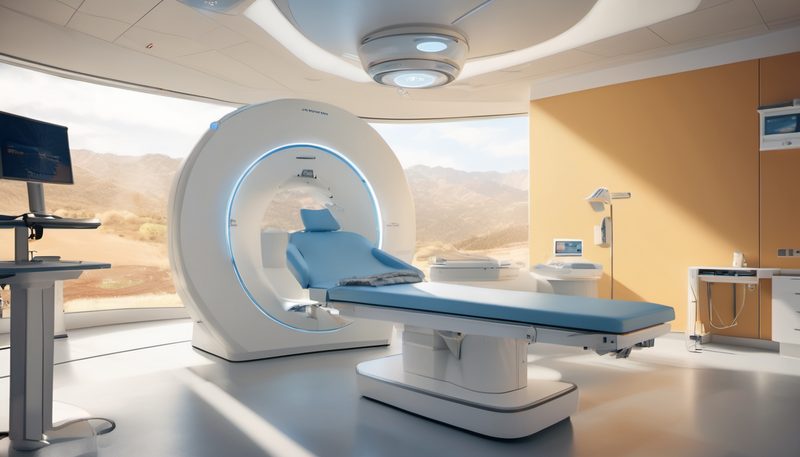
During radiotherapy, a quick cone-beam scan helps aim treatment at the tumour. The same image is often too grainy and distorted to calculate dose safely, so clinicians may order another CT scan. That extra scan adds radiation, cost, and waiting time. A new way of rebuilding a cleaner, CT-like volume from the noisy scan could change that workflow by using the scanner's own geometry as a built-in check.
In Portugal's emergency departments, a hospital's forecast should fit inside its region, and every region should fit inside the country. Yet many demand models treat each level as separate, leaving planners with numbers that look precise but do not reconcile. The question is whether one system can predict patient visits 28 days ahead while keeping hospital, regional and national totals in line.
A protein linked to Parkinson’s disease can build up in specific brain regions long before movement problems appear. Scientists used a rat model that carries the human gene for this protein and tested whether reducing it early could change behavior, signaling, and regional brain chemistry.
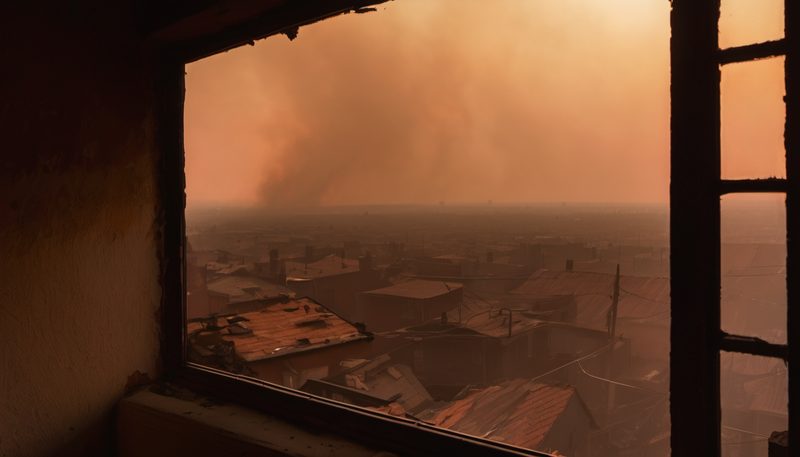
When temperatures rise, wildfires send smoke across cities, and factories or traffic add particles to the air, people do not breathe a single risk. They face several at once. The public health question is no longer only whether dirty air harms bodies. It is who faces those harms first, why some communities recover more slowly, and what actions can protect them.
A country can look well supplied when the rivers on its map are long and blue. In Azerbaijan, much of that water does not start at home. The question is how much of it can be counted on for farms, factories, cities and the ecosystems that depend on stable flows.
Hantaviruses have long lived in rodents, and most people never meet them. Yet the viruses that cause serious illness can jump to humans when conditions line up. Climate change is moving habitats, shifting rodent behavior, and changing how long virus particles survive outside their bodies. The puzzle is whether these shifts make outbreaks easier to anticipate or harder to stop.
Couples who use intrauterine insemination often focus on hormones, clinic protocols, and the timing of each cycle. The air they breathe during that window has received less attention. In one Chinese city, medical records from thousands of inseminations were paired with daily measurements of common pollutants. The question was whether a gas people cannot smell might be tied to whether an embryo implants and a pregnancy is confirmed.
Every spring, the air carries a schedule of pollen that shapes sneezes, sleep and medication choices. In Parma, Italy, airborne pollen and spores have been counted for more than two decades while weather warmed. The question is whether those schedules are drifting, and what that drift means for people who plan around allergy season.
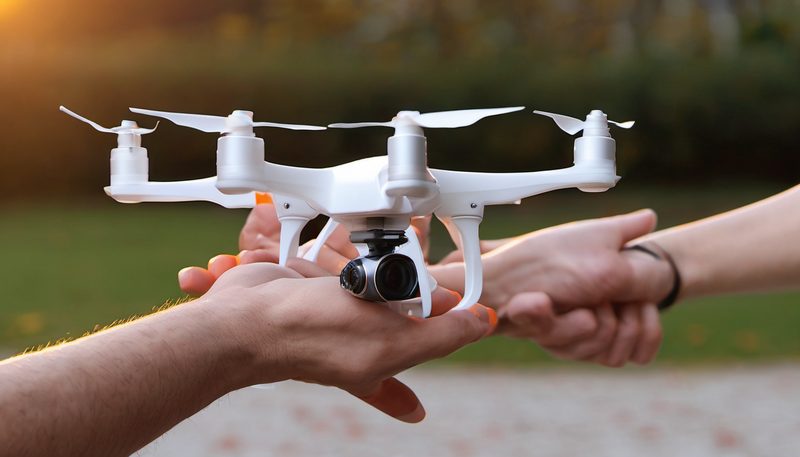
When wildfires race through dry hills, crews can be slowed by smoke, broken radio links, and exhausted shifts. A computer experiment asks whether small drones could help by learning to fly around fire on their own. Instead of following fixed rules, the drones are trained in a virtual world where flames appear, spread, block paths, or crash into obstacles. The goal is not to drop water but to understand how groups of autonomous aircraft can keep watch over dangerous edges, share information, and adapt as conditions change.
Biologists testing thousands of genes often face an expensive question: which untested genes should go into the next batch? A new machine-learning approach combines a general-purpose language model with a specialized policy that learns from past gene hits, screen descriptions, and round-by-round lab feedback. The goal is to turn noisy experimental results into better guesses about what to test next, while keeping choices grounded in known biology.
For a blind person moving through a room, the hardest part may be knowing where things are before reaching out. One answer is to stop describing objects in words and instead give them a place in space as sound. A wearable pair of glasses can detect nearby items and play short everyday sounds around the head, so a bottle might feel like it is coming from the left while a cup sits ahead. The question is whether that kind of spatial audio can guide hands reliably enough to matter.
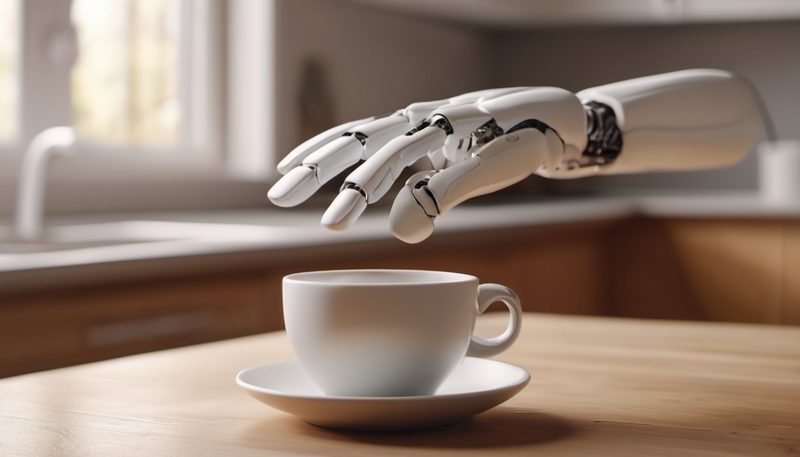
A robot arm reaches for a cup, a package, or a surgical tool, and the hard part arrives before contact: deciding which motion will hold up once the world pushes back. Engineers are teaching machines to run short rehearsals of possible moves, using learned models that predict what cameras, joints, and objects might do next. Those rehearsals sit beside real safety checks, factory deployments, and medical robots already in use.
During radiotherapy, a quick cone-beam scan helps aim treatment at the tumour. The same image is often too grainy and distorted to calculate dose safely, so clinicians may order another CT scan. That extra scan adds radiation, cost, and waiting time. A new way of rebuilding a cleaner, CT-like volume from the noisy scan could change that workflow by using the scanner's own geometry as a built-in check.
In Portugal's emergency departments, a hospital's forecast should fit inside its region, and every region should fit inside the country. Yet many demand models treat each level as separate, leaving planners with numbers that look precise but do not reconcile. The question is whether one system can predict patient visits 28 days ahead while keeping hospital, regional and national totals in line.
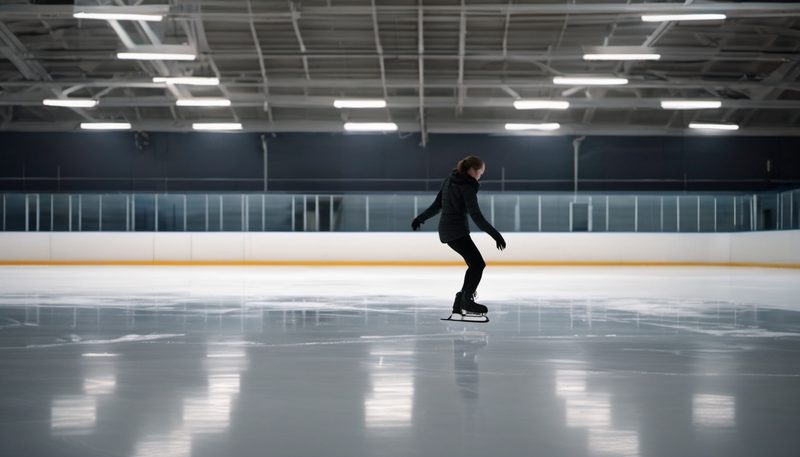
When a skater glides across Olympic ice, today's live video sends millions of pixels for the rink, crowd, and camera angle again and again. GenStream proposes a different route: transmit only the moving performer's pose, a simple box around them, and the viewpoint needed to rebuild the scene. The viewer's device then paints realistic bodies into a prebuilt 3D arena. The idea promises much smaller streams for sports and performance video, but it shifts heavy work from the network to the screen.
Household robots must decide what to do next while objects slip, sensors miss things, and instructions change mid-task. A new training method lets them learn from their own mistakes in simulation, turning failed rollouts into examples that teach better recovery without step-by-step human demonstrations.
When a voice is altered to protect identity, the question is whether it still carries clues that can link it back to its owner. Speech de-identification raises several different risks at once. Five systems are compared for matching resistance, leakage of age and sex, separation between speakers, and usefulness for listening.
After sixty, low mood can settle in quietly. Some foods may help the brain resist that weight, while others may do little or even work against it. This piece follows the evidence from plant compounds to daily meals, and asks what is realistic for an older adult who wants to protect their mood without adding another pill.
Melanoma is hard to treat because it grows, spreads and learns to ignore chemotherapy. A team in China built a dissolving microneedle patch for mice: tiny needles carrying doxorubicin and a CRISPR/Cas9 complex aimed at the YB-1 gene. The question was whether pressing such a patch onto skin could deliver both agents close enough to the tumor to change its behavior.
Blood pressure is usually checked with a cuff that squeezes the arm and gives a single number. But the pulse itself carries more information: its shape changes as it travels through arteries, and those changes can hint at how blood moves in the body. A new passive wrist patch tries to turn that hidden detail into something an ordinary phone camera can see. The device has no battery or wires. It uses a stretch-sensitive film whose color shifts when the artery beneath it beats.
Biologists testing thousands of genes often face an expensive question: which untested genes should go into the next batch? A new machine-learning approach combines a general-purpose language model with a specialized policy that learns from past gene hits, screen descriptions, and round-by-round lab feedback. The goal is to turn noisy experimental results into better guesses about what to test next, while keeping choices grounded in known biology.
Older adults leave long trails of medical codes in insurance records: diagnoses, procedures, prescriptions, and the months between them. Those trails can hide patterns that are hard to see by eye, especially when a treatment might be linked to a later decline in memory or thinking. The question is whether routine claims data can be turned into a practical way to spot such patterns before they become testable drug ideas.
After sixty, low mood can settle in quietly. Some foods may help the brain resist that weight, while others may do little or even work against it. This piece follows the evidence from plant compounds to daily meals, and asks what is realistic for an older adult who wants to protect their mood without adding another pill.
In many homes, a child's bedtime is treated as a routine to manage rather than a sign to read. For preschoolers with autism, that routine can look different from the start: nights may begin later, end later, and be broken more often. The question is whether those patterns are visible early enough to matter.
A protein linked to Parkinson’s disease can build up in specific brain regions long before movement problems appear. Scientists used a rat model that carries the human gene for this protein and tested whether reducing it early could change behavior, signaling, and regional brain chemistry.
A short recording of your breathing can carry more than rate and depth. Sixty-second breath traces from a public dataset, recorded while people sat at baseline, felt stress, amused themselves, or meditated, are checked for subtle timing, rhythm, and waveform patterns that might separate those states without asking anyone how they felt.
Brain metastases can range from large, obvious masses to specks barely visible in a 3D MRI scan. A computer system must find every one of them while avoiding false alarms that could send patients toward unnecessary treatment. One way to test whether scale matters is to give the same type of computer model two different views of the brain: a wide view with more context and a tighter view where small lesions occupy more space.
A new theoretical model treats large language models less as software and more as a cultural habit that can spread through societies. It asks whether the convenience of asking an AI to read, write, reason, or check work could change not just individual productivity but the collective capacity for unaided thinking. The framework borrows ideas from epidemic spread, cultural evolution, and cognitive offloading to explore how adoption, dependence, autonomy, and recovery might interact across a population.
Astronomers can weigh the heaviest pulsars, but they cannot touch the matter inside them. To bridge that gap, nuclear physicists tune mathematical descriptions of atomic nuclei using measured masses, sizes and excitations, then ask what those same rules imply for a star made mostly of neutrons. A fresh Bayesian calibration adds calcium and tin isotopes whose protons and neutrons do not all pair off neatly, along with an updated giant-monopole energy in zirconium-90. The result is a probability map, not a single answer, for the softness of neutron-rich matter and the composition of a neutron star's solid outer layer.
Biologists testing thousands of genes often face an expensive question: which untested genes should go into the next batch? A new machine-learning approach combines a general-purpose language model with a specialized policy that learns from past gene hits, screen descriptions, and round-by-round lab feedback. The goal is to turn noisy experimental results into better guesses about what to test next, while keeping choices grounded in known biology.
Hantaviruses have long lived in rodents, and most people never meet them. Yet the viruses that cause serious illness can jump to humans when conditions line up. Climate change is moving habitats, shifting rodent behavior, and changing how long virus particles survive outside their bodies. The puzzle is whether these shifts make outbreaks easier to anticipate or harder to stop.